
Over 80 years have passed since the harrowing events of the Second World War. The global conflict affected hundreds of millions of people worldwide, including the British. At the very start of the war, London, Birmingham, Manchester, Liverpool, and other major cities endured massive bombing campaigns. Some military and administrative institutions were evacuated to the suburbs, which were considered relatively safe. The country faced unprecedented challenges in its economy, healthcare, and public morale. For the public, the primary task was to survive, unite, and show resilience and courage to ultimately defeat the enemy. Eyewitnesses to these events have preserved and shared their memories of what life was like on the outskirts of Birmingham during the war. This article offers a glimpse into the wartime daily life of Solihull. Read on at birminghamyes.com.
A Strategic Town
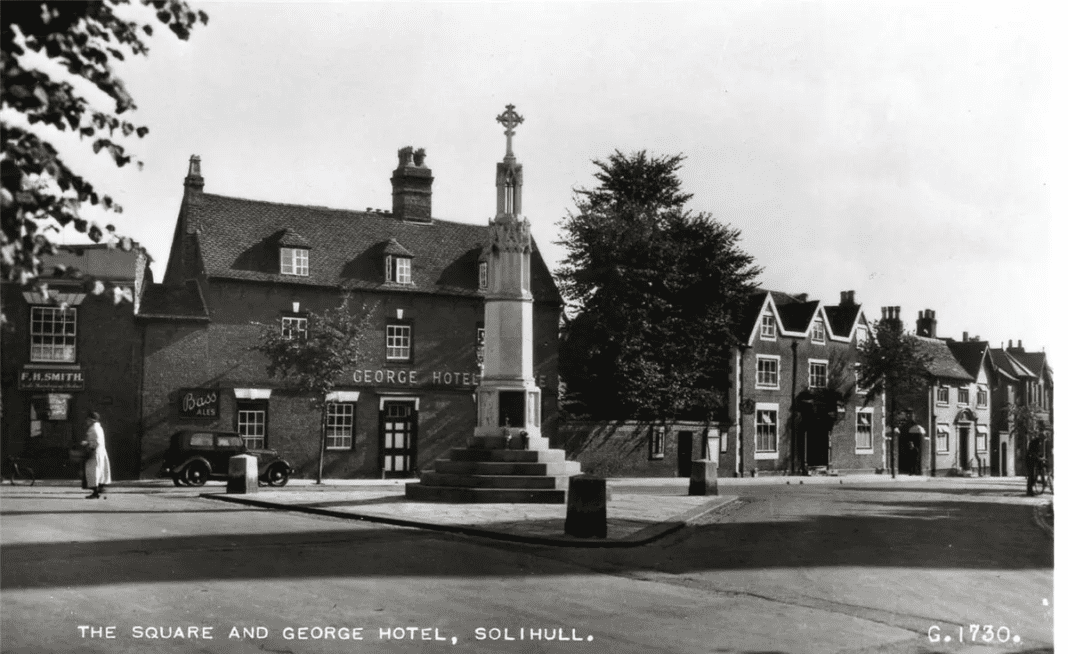
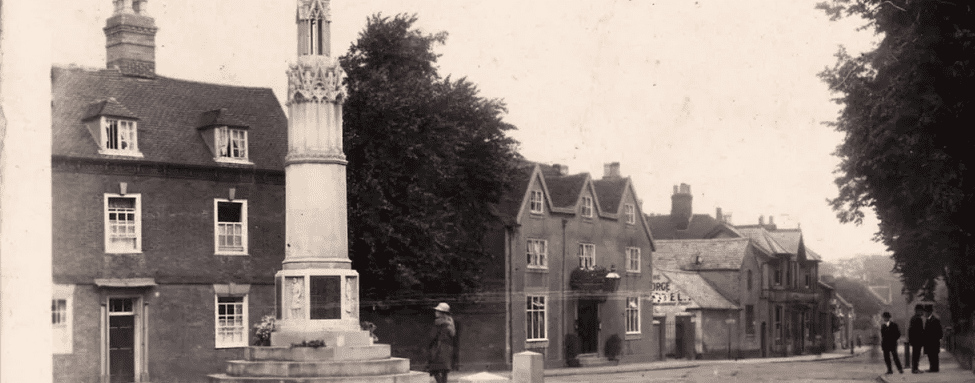
References to a fortified outpost on the edge of the dense Forest of Arden, a place even the Roman invaders tried to avoid, date back to the first century BC. The name Solihull first appeared in records in 1170. The town became famous for its markets and fairs. While the Industrial Revolution largely bypassed it, craftsmanship and agriculture thrived. In 1901, Solihull’s population was no more than 10,000 people. During the First World War, it housed hospitals for the wounded and the Army Remount Service, responsible for supplying warhorses to the front line. In 1936, the government granted the town administrative status and purchased two farms to build factories. The pre-war strategy involved placing secret facilities in the countryside to prevent their destruction if Birmingham were to be bombed. In 1939, just two months before the outbreak of the Second World War, British Prime Minister Neville Chamberlain personally attended the opening ceremony of a new airfield in Solihull. Locals understood that preparations for war were underway. A year later, the airfield began to be used for military operations, and the factories received secret government contracts.
Shelters, Gas Masks, and Smokescreens
A few months before the war, public bomb shelters were built in Solihull, and many residents set up their own in their gardens. Not all public shelters were comfortable. Floors were often damp, and the cramped conditions caused some people to feel claustrophobic. People slept on bunk beds and used candles for light.
Everyone was issued a gas mask in case of a chemical attack. Special ‘Mickey Mouse’ designs were created for children, while infants were provided with portable gas-proof chambers. People could practice and test their gas masks in a special room filled with tear gas. Furthermore, everyone was ordered to carry their gas masks with them at all times.
Despite its proximity to Birmingham, Solihull was not considered a high-risk area for air raids, though it did not escape bombing entirely. At the start of the conflict, several tanks of crude oil were installed in the town. These were periodically set alight to create thick smokescreens, aiming to confuse enemy aircraft targeting Birmingham. These anti-air raid precautions were successful, and the town avoided significant destruction.
Mobilisation, ‘Shadow Factories’, Emergency Services, and Transport
A significant number of men, and some women, between the ages of eighteen and forty were conscripted. Families often had no idea where their loved ones were stationed, and notifications about those killed or wounded arrived regularly by telegram. Almost the entire able-bodied population was engaged in work for the military-industrial complex. The ‘shadow factories’ strategy involved duplicating vital production in different locations. This meant that the same product would be made alternately at various sites. This way, if one factory was bombed, it wouldn’t halt the entire production line.
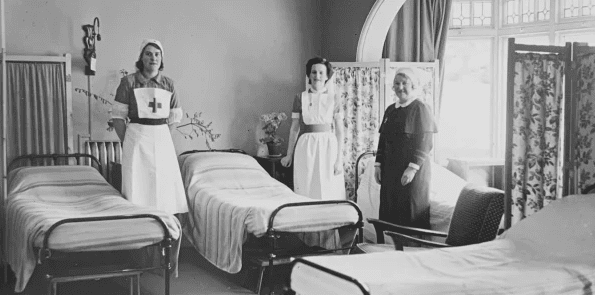
Medical facilities played a crucial role in the town. In addition to the pre-war emergency hospital, several additional hospitals were set up in large private houses to treat the wounded. Unfortunately, there was a critical shortage of medical staff, and doctors often worked multiple shifts without a break.
Other emergency services operated smoothly. Despite fires and damage to power lines after air raids, emergency repairs were carried out quickly and efficiently. The water supply remained almost uninterrupted. The Solihull Fire Service was often dispatched to assist neighbouring cities, particularly Coventry, which suffered relentless bombing throughout much of the first year of the war.
Transport was severely hampered by fuel shortages. The use of private cars was strictly forbidden. At the start of the war, all vehicle owners were required to immobilise them to prevent use in case of an enemy invasion. A bus service connecting Solihull to Birmingham was established with a few buses running on regular routes. For the most part, Solihull residents relied on bicycles for transport.
During the hours of darkness, a strict blackout was enforced, which even applied to streetlights and traffic lights. This made cycling at night impossible. All car factories in the country were repurposed for the war effort. The Ministry of Defence supported the operation of garages, as certain vehicles were needed for communications. However, spare parts were difficult to obtain as factories no longer produced them. Parts for repairs were often salvaged from other vehicles that were beyond repair. Garage staff would tow broken-down vehicles under escort.
Food and Rations
The main problem for local residents was the food shortage. Rationing was introduced, limiting each person to a small weekly amount of butter or margarine, cheese, meat, and sugar. Pregnant women and infants received extra allowances of milk and orange juice. Every resident was registered with a specific shop where they collected their rations. Rationed goods were exchanged for coupons, which shopkeepers then had to submit to the Food Office for accounting. Fruits, vegetables, and grains would occasionally appear in shops, but there were always long queues for them. Oranges and bananas vanished from shop shelves almost as soon as the war began. Flour was in critically short supply in Solihull. Many people remembered the ‘National Loaf,’ a pale brown bread that sometimes contained sawdust. Some people received food parcels from relatives abroad, particularly from the USA. To supplement their diet, people were encouraged to “Dig for Victory” by growing their own vegetables on plots of land, or ‘allotments,’ provided by the town administration.
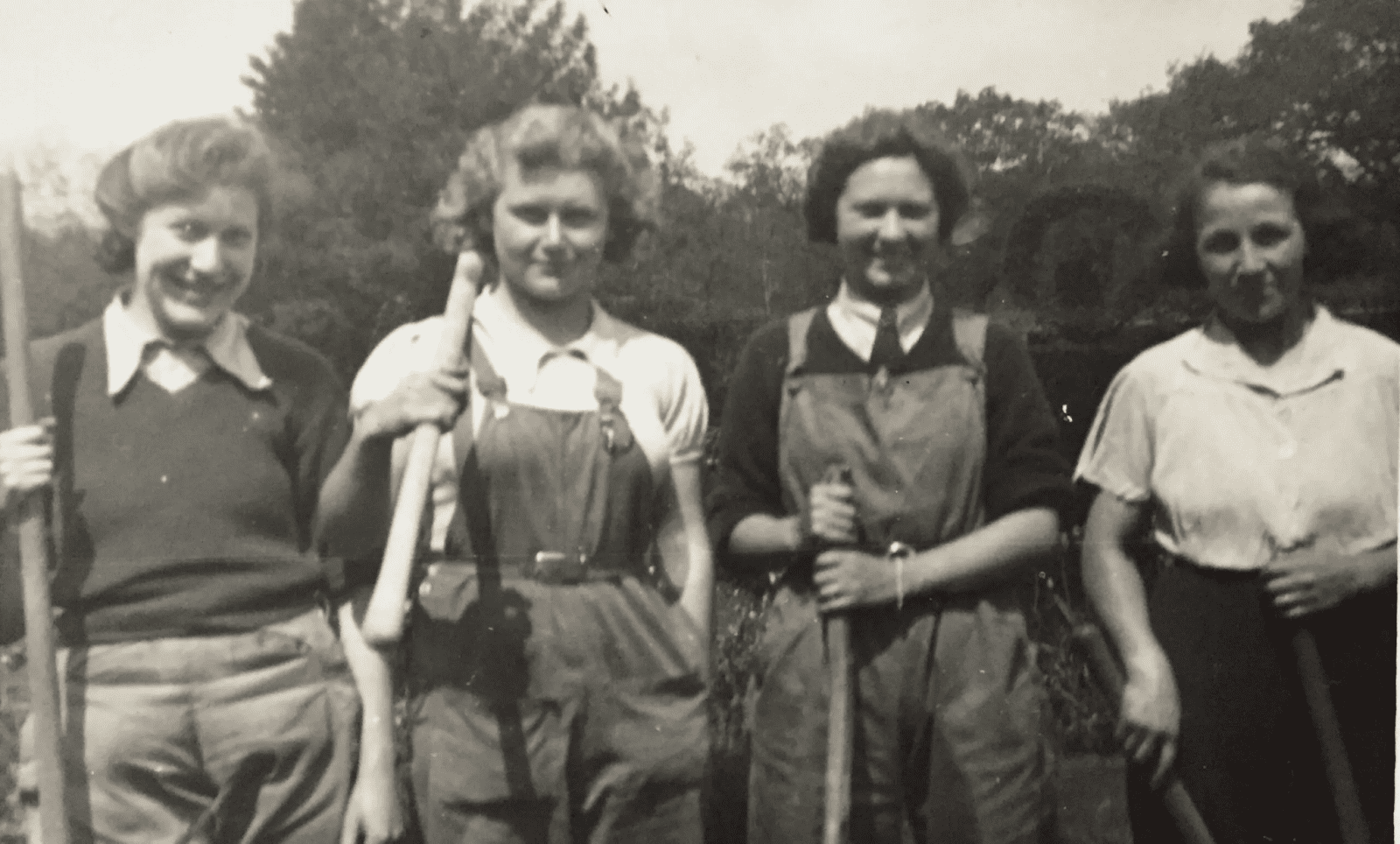
Almost everyone with a garden kept chickens. Some town residents raised pigs, though these had to be officially registered.
Factory workers could get a substantial meal in their canteens. For those without this option, a network of ‘British Restaurants’ was established, offering meals at reasonable prices. A main course cost five pence. Two pre-war restaurants continued to operate, though their menus were very different from before.
Finally, in May 1945, the news of victory arrived. It was met with great joy and celebration. Street parties were organised with food, at least for the children, and fireworks.
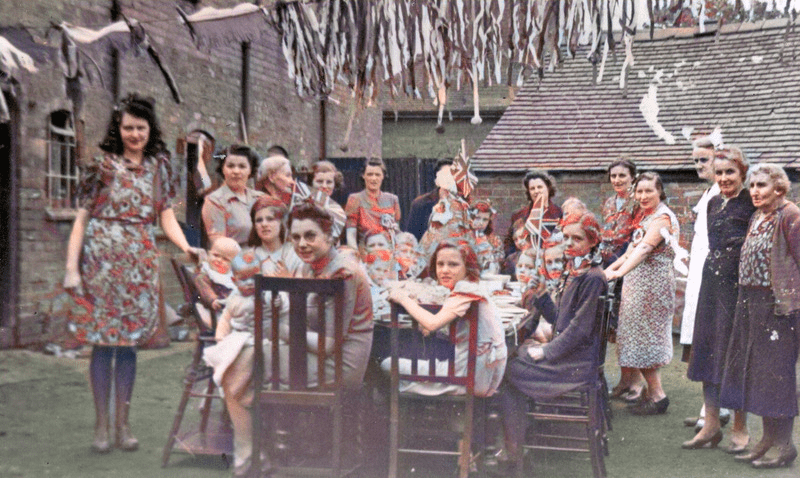
Despite the hardships of nearly six years of war, many people remembered a spirit of camaraderie that often overshadowed everything else.