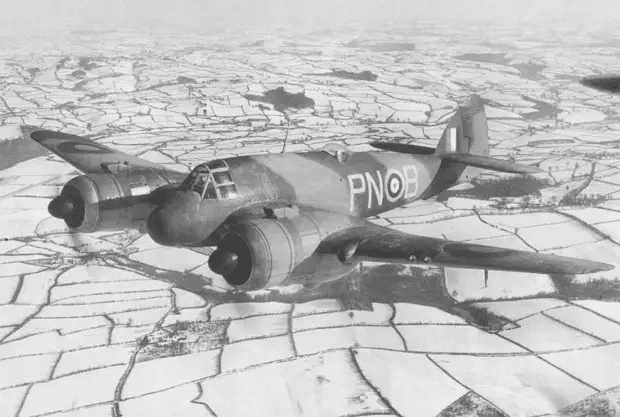

Since the Industrial Revolution, Birmingham’s economy has been dominated by the metalworking industry. The late 19th century saw a significant boom in factories and large-scale plants across the city. By the early 20th century, engineering had emerged as a leading economic sector. During the First World War, local factories were pivotal, fulfilling defence contracts for munitions, military hardware, and aircraft, including fighters and bombers, which gave the nation a critical military edge. Its vital role in the defence industry during the Second World War made Birmingham a prime target for the Luftwaffe. The sustained bombing campaign, which started in August 1940 and ended in April 1943, is now known as the “Birmingham Blitz”. More on this at birminghamyes.
The Start of the Attacks
The first enemy raid on the city took place on 9 August 1940. A lone Luftwaffe aircraft dropped several bombs over the Erdington district. It failed to hit any military targets, but one civilian was tragically killed and six others were injured. Early on 13 August, the Castle Bromwich aircraft factory was bombed. The attack, involving 11 bombs, resulted in the deaths of seven workers and left 41 injured. Unable to cripple their intended targets, the enemy shifted its strategy to terrorising the local population. In the dead of night on 26 August, the city centre was bombed, killing 25 civilians. This raid targeted the food market in the Bull Ring shopping centre, this time with incendiary bombs, which were designed not only to destroy but also to spark widespread fires. In the end, only the shell of the building was left standing. A month later, another raid on the city centre damaged several historic landmarks, including the Town Hall, the University of Birmingham, the Museum and Art Gallery, and St. Philip’s Cathedral.
The Major Raids
In November 1940 alone, Birmingham was attacked by over 740 enemy aircraft. These raids left 20,000 people homeless, killed 800, and injured 2,345. But the onslaught wasn’t over. In December 1940, Birmingham endured two more massive attacks. The first, on 4 December, involved nearly 60 enemy planes and destroyed the Witton tram depot. On the night of 11 December, a fleet of 278 aircraft launched a relentless 13-hour raid, dropping almost 25,000 incendiary and high-explosive bombs. Industrial areas bore the brunt of the attack, and huge fires swept across the city. The sky over Birmingham was choked with black smoke, and a foul stench filled the air. In a single day, 263 people lost their lives, with a similar number injured. After the devastating raids of 1940, it was hard to believe that the worst was yet to come.
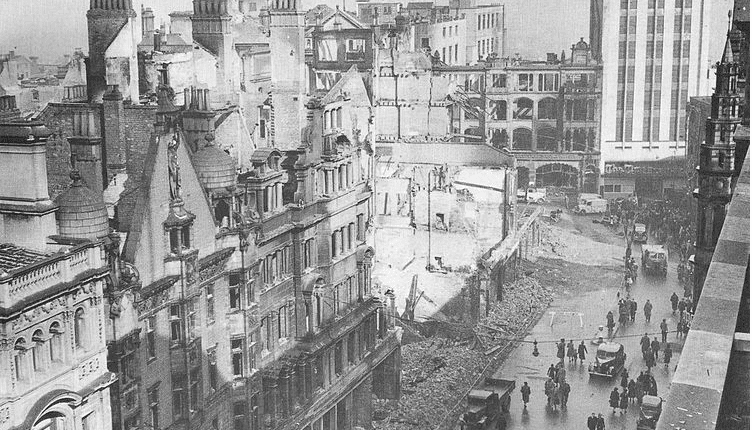
The city saw a period of relative calm until the spring of 1941. A new wave of air raids began in March, involving 135 bombers. April 1941 saw the single heaviest bombing of the Blitz, with nearly 500 aircraft involved. On the 9th and 10th of April, over 550 tonnes of high-explosive bombs and more than 80,000 incendiaries were dropped on the city. This two-day assault from the sky killed 1,121 people, leaving the city centre in ruins. The raids continued into May, targeting industrial districts. For the next two years, the attacks were sporadic. The final recorded raid was on 23 April 1943.
Throughout the Second World War, factories in the suburbs of Birmingham successfully maintained production of military equipment, including vital aircraft. Eventually, the British forces achieved air supremacy, paving the way for a hard-won victory. The Luftwaffe’s campaign against Birmingham ultimately claimed the lives of 2,241 residents. Over 3,000 people sustained serious injuries, and nearly 13,000 homes were destroyed. The Birmingham Blitz remains one of the darkest chapters in the city’s history.