
War is grief and sorrow. However, many people show heroism, courage and bravery, inspiring others in hard times. There are military stories that continue to impress through time. One of them is about the British pilot Charles Hall, nicknamed Chaz. Learn more at birminghamyes.
Interests and first military missions
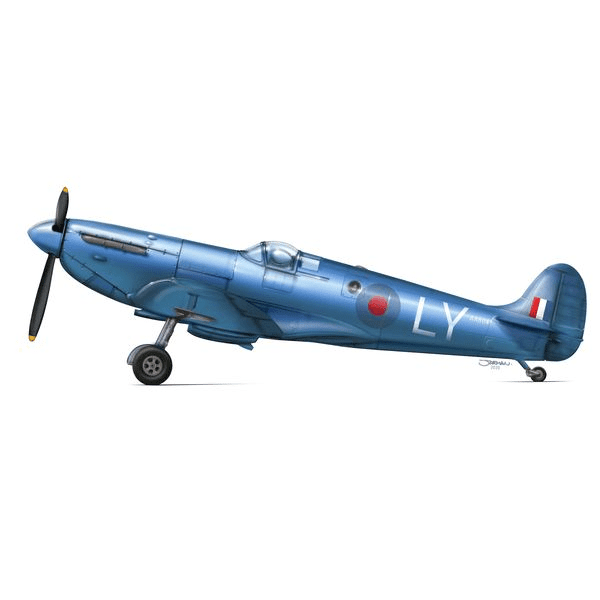
Charles Piers Egerton Hall was born in Kings Norton near Birmingham in 1918. Like most young men of that time, he was fond of photography and aeroplanes. When Charles came of age, he enlisted in the Royal Air Force. During his flight school, he was nicknamed Chaz. Military affairs are usually kept secret. Therefore, we just know that he has held the position of photographer and piloted aeroplanes. Thus, the young romantic managed to achieve professionalism in activities he was fond of.
21-year-old Pierce Hall had not finished his studies yet when World War II began. He was being trained to become a reconnaissance pilot. His duties included collecting data on the location of enemy targets and photographing them. It is worth noting that aerial reconnaissance was a risky business in World War II. Pilots had to fly at an altitude three times lower than usual to take high-quality photos. It made the planes an easy target for the enemy. Chaz made his first operational photo-reconnaissance sortie on December 16, 1941. The report indicated that he flew over the Netherlands, took a photo and arrived at the base. The next day, Hall completed the task, but among the clouds, he noticed two German planes. He descended lower and imperceptibly left the risk zone. The third flight on December 28, 1941, was unsuccessful. Chaz was returning after conducting a photo reconnaissance over Germany. During the flight over the Netherlands, there was a problem with the engine and he had to eject in enemy territory. German soldiers captured the pilot in a forest area.
The Stalag Luft III camp
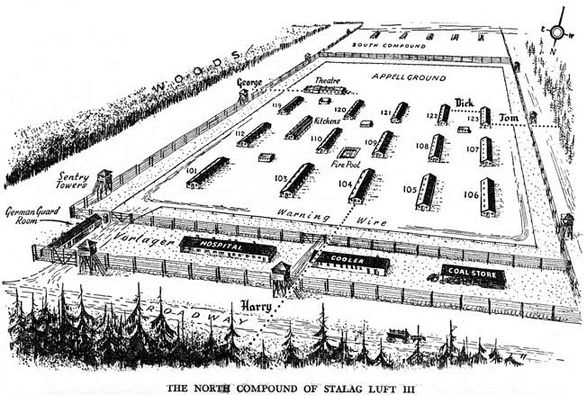
In the spring of 1942, the Nazis established the Stalag Luft III camp for prisoners of the Air Force of Great Britain, the United States and their allies. It was located near the town of Sagan in Lower Silesia. The camp was under the supervision of the Red Cross and the prisoners regularly received humanitarian aid. However, the organisation didn’t compile lists of prisoners of war. Information about Charles Hall’s detention there didn’t reach either his relatives or his superiors until March 1944. The camp was deliberately built on sandy soil, as it made it difficult to dig escape tunnels. Still, Stalag Luft III became famous precisely because of two grandiose break-free plans. Two POW aid agencies sent secret information with instructions for escape given by the American and British secret services. In October 1943, three pilots of the United Kingdom managed to escape from captivity through a dug tunnel, which they disguised as a gymnastic horse. All of them successfully arrived home pretending to be merchants. Thus, militaries started to develop a detailed plan for the Great Escape for 200 people.
The Great Escape
The tools for digging tunnels were empty cans, which were given by the Red Cross. In total, it was possible to dig three tunnels in different directions. The prisoners collected sand in towels and hid them in their pockets. Then they spilled it in certain areas of the yard during walks. The guards suspected something but could find nothing. The preparation lasted for several months. During that time, the prisoners repainted their uniforms to look like civilian clothes and obtained false documents. Everyone had a separate instruction with a route after the escape. In March 1944, it was time to choose 200 people from 600 applicants who contributed to the operation. The first hundred included those who spoke German well. The next hundred were chosen by lot. Charles had no luck. However, one of the chosen prisoners with a medical education decided not to go. He believed that he could be useful in the hospital. He gave up the chance to 25-year-old Chaz.
The Great Escape plan came into effect on the night of March 25, 1945. Something went wrong from the very beginning. Unexpectedly, an air raid alarm was turned on and the lights were turned off in the entire territory of the camp. It also became dark in the tunnels. Some prisoners had bulky luggage that damaged the underground passage. It had to be repaired twice, which resulted in a loss of time. Those 100 metres turned out to be the most difficult. When the 80th prisoner was getting out from under the ground, one of the guards noticed the escapee. They arrested him and three other prisoners. Thus, 76 people, including Chaz, managed to leave the territory of the camp. Unfortunately, only three pilots managed to reach a safe place. The remaining 73 were caught and sent to the Gestapo for interrogation. Charles Hall was among them.
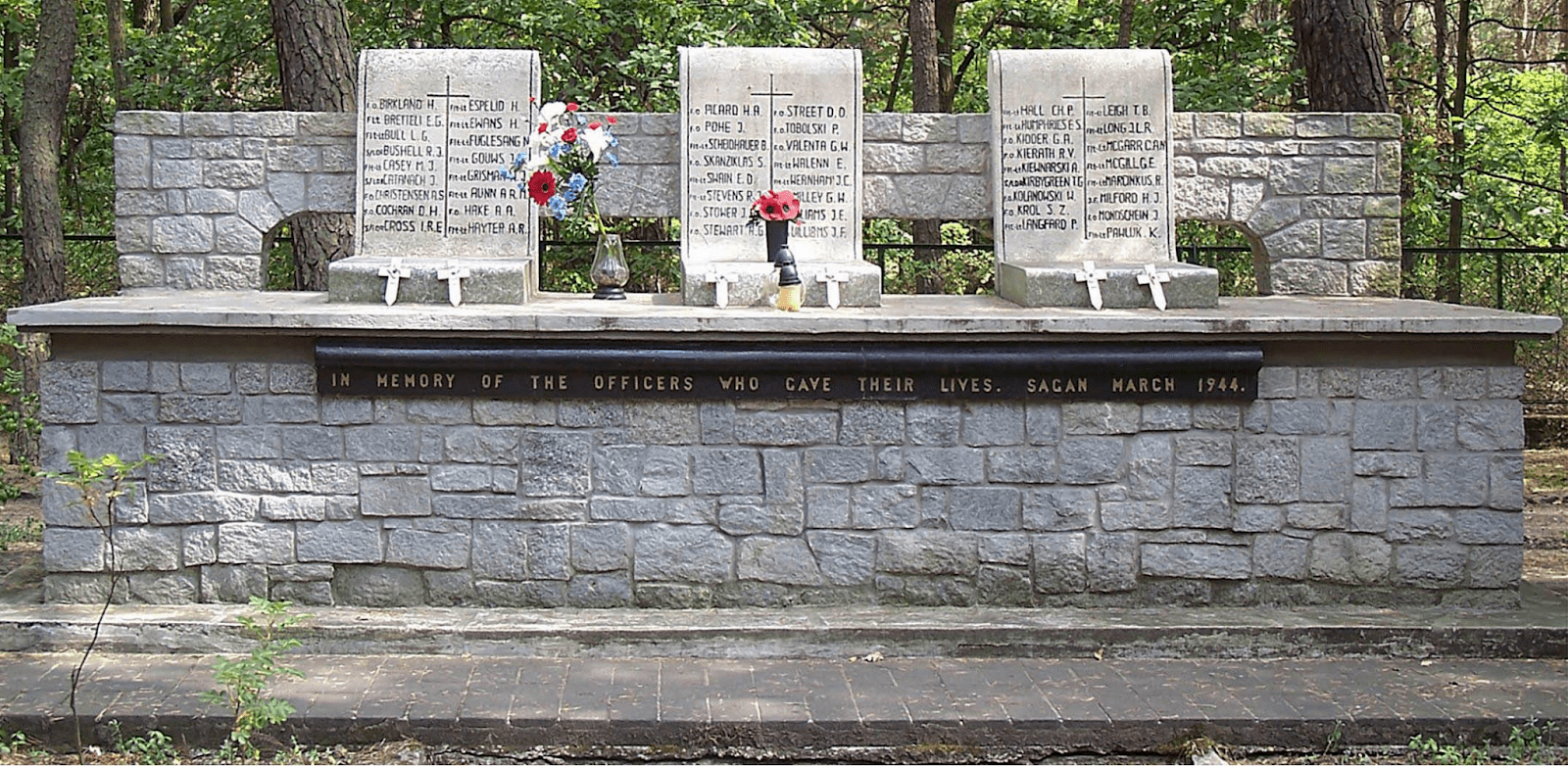
The escape made Adolf Hitler furious. He personally ordered the execution of 73 prisoners of war. However, Heinrich Himmler convinced the Führer that it could greatly harm Germany in negotiations and he agreed to punish 50 prisoners. Unfortunately, Charles Piers’s name was on the hit list. Before the execution, on March 30, 1944, Chaz made an inscription in his cell saying “We who are about to die salute you“. It testifies to the heroism and courage of prisoners of war. His words provided support to prisoners and helped them preserve human dignity.
POWs of the Stalag Luft III camp built a memorial with 50 cremation urns. After the victory in 1945, the victims of Hitler’s arbitrariness were buried in the cemetery in Poznań.