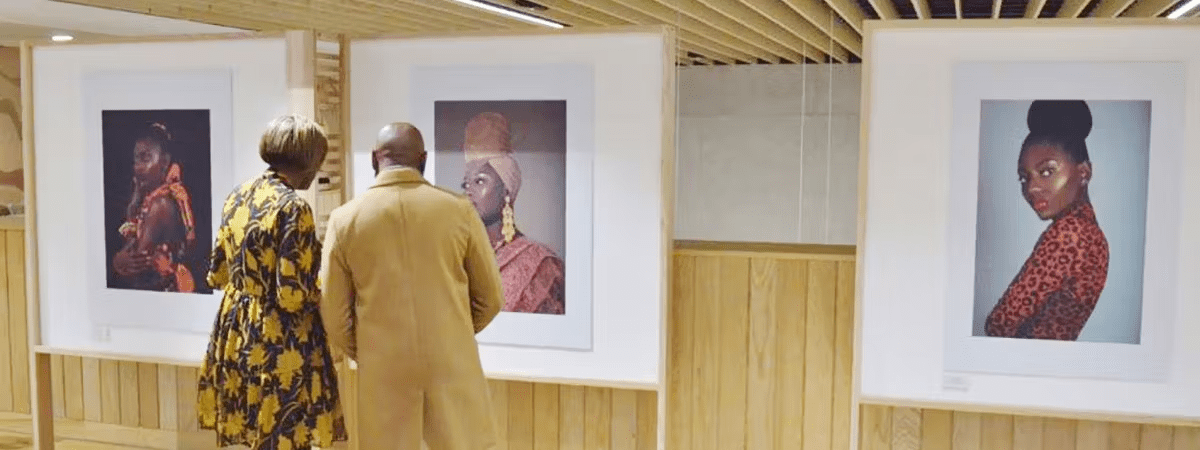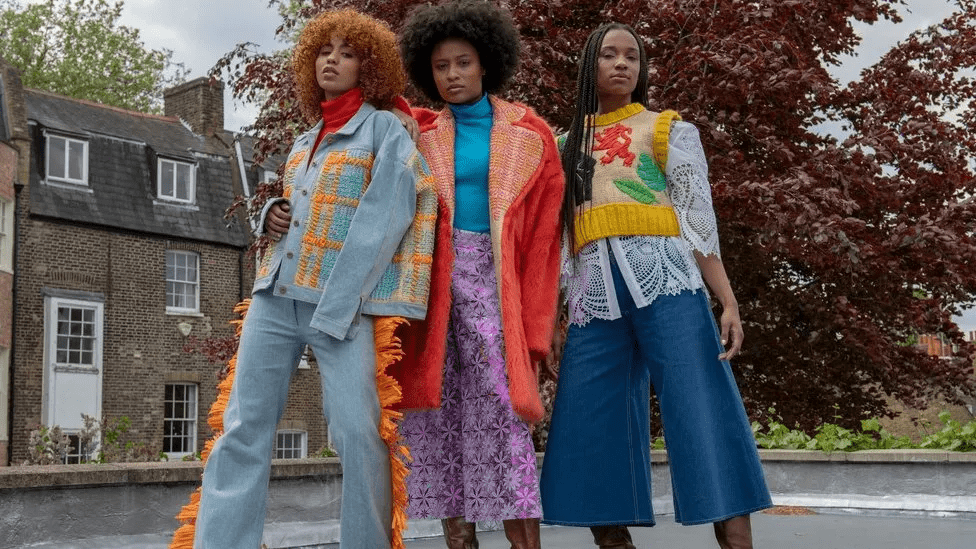

As a major cultural centre, Birmingham is home to a diverse population, including people of African, Caribbean, Indian, and Asian heritage. The tradition of celebrating Black History Month originated in the United States, but it spread to the United Kingdom during the second half of the 20th century. In Birmingham, as in other major UK cities, the event has been observed every October since 1987. Throughout the month, commemorative events are held to honour the fight against slavery, racism, prejudice, and poverty. It is a time to remember the contributions of ethnic minorities to the country’s cultural and political life. Activities include parades, memorial services, lectures, museum exhibitions, protests, and festivals. Read more at birminghamyes.
Historical Background
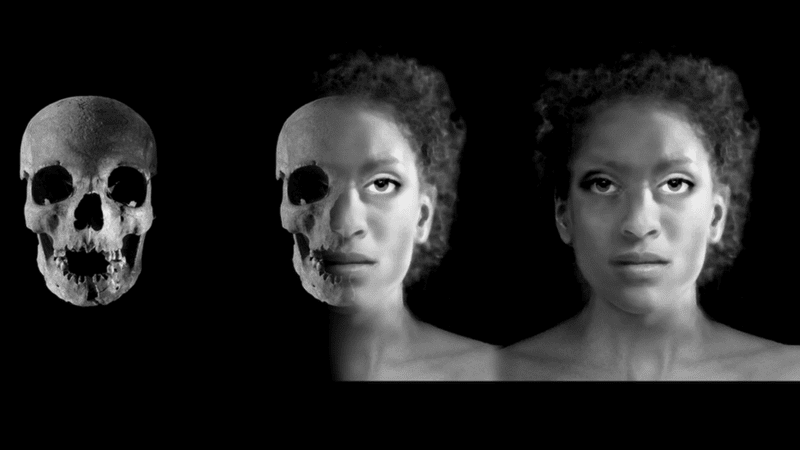
Notably, the first evidence of people of African descent in Britain dates back to Roman times. This is supported by the remains of the “Ivory Bangle Lady,” discovered in York. Researchers believe she was not an impoverished slave, as her burial included valuable items such as costly earrings, a blue glass jug, and a mirror.
Another significant piece of evidence is a 16th-century scroll depicting John Blanke, a Black trumpeter in the court of Henry VIII. A letter from him to the King requesting a pay rise has been preserved; this is notable, as courtiers were generally well-compensated compared to peasants and artisans. In 1761, King George III married the German princess Charlotte who, according to historians, had African ancestry as a descendant of a Black branch of the Portuguese royal family. Charlotte was the great-grandmother of Queen Victoria.
In the late 1910s, Black people from Jamaica were brought to the UK to serve on the front lines during the First World War. Many of them fought heroically and subsequently settled in the country. After the war, the first race-related clashes began. White people accused the newcomers of taking their jobs, and local English workers often refused to work alongside their Black counterparts. These tensions arose in all major UK cities, including Birmingham, with some confrontations ending in bloodshed. Later, a common accusation against ethnic minorities was that they were seducing white women, although interracial relationships and marriages were rare at the time. After the Second World War, the British government formally invited people from India, Asia, Africa, and the Caribbean to help rebuild the nation.
Racial Tension in Smethwick
In the mid-20th century, Birmingham became a hub of social and racial tension. In 1965, white property owners lobbied Smethwick Council to buy up all available houses in the area to prevent them from being sold to Black and Asian communities. The campaign was supported by the local Conservative MP, Peter Griffiths, who had based his election campaign on slogans claiming that immigration was causing housing shortages for the poor. On 12 February 1965, the Indian Workers’ Association invited American civil rights activist Malcolm X to Smethwick. He accepted and led a peaceful march to protest the openly racist lobbying.
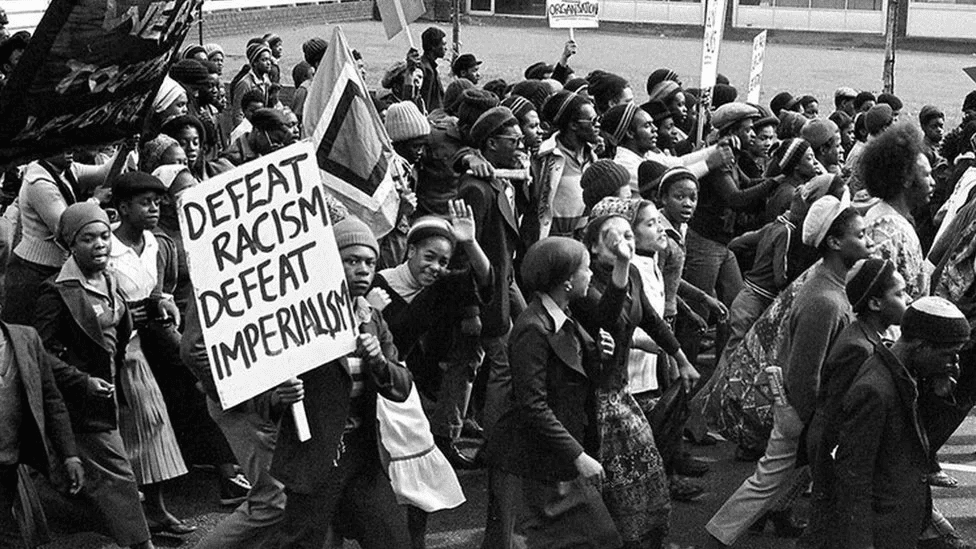
Tragically, the protesters’ demands were not heeded by the authorities. For Malcolm X, this would be his last public protest. Nine days later, he was assassinated in New York while speaking at a rally for the Organization of Afro-American Unity.
The Handsworth Riots
Between 1955 and 1985, Handsworth became a predominantly Black and Asian area. The district had one of the highest unemployment rates in Birmingham; in the 1980s, only 5% of school leavers found a job. In 1981, an outbreak of violence was sparked by an attack on a police officer who was attempting to reassure the public after the racist, far-right National Front was given permission to march in the city. The violence resulted in 40 injured police officers, widespread property damage, and 121 arrests. The week before the riots, protests against discrimination towards the Black community had taken place in over 30 UK cities, including Toxteth, Liverpool, where tear gas was used against rioters for the first time on the British mainland. A police report attributed the Handsworth riots to “unemployment, boredom, and a copycat effect from events in other cities.” As a result, tensions continued to escalate.
Handsworth was shaken again in 1985. From 9-11 September, mass protests erupted against aggressive police actions, following the baseless arrest of a Black man and a raid on a private home. Hundreds of people attacked police, looted shops, and vandalised and burned property in their path.
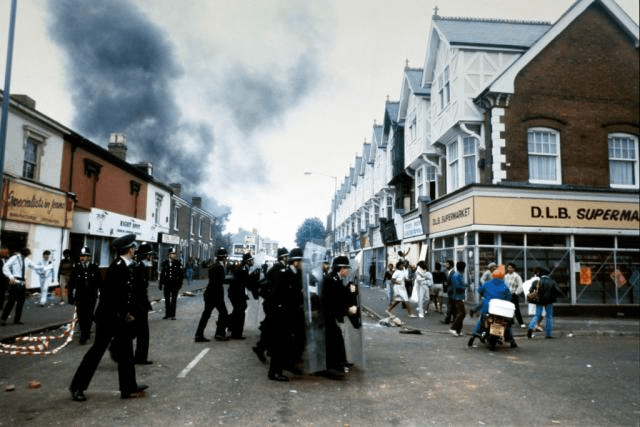
Two brothers, Kassamali and Amirali Moledina, were burned alive inside the post office they managed. Two other people went missing, and 35 were injured. To restore order, 1,500 police officers were deployed, eventually suppressing the riots. The damages were estimated in the hundreds of thousands of pounds. These events sent shockwaves through other British cities; in London, a police officer was killed by rioters.
The riots were documented by John Akomfrah in his film “Handsworth Songs,” which combines dozens of eyewitness accounts with footage of the street clashes. The film received numerous awards and has become a vital part of Birmingham’s historical legacy.
Although it is now impossible to write the history of Britain without acknowledging the achievements of its ethnic minorities, their contributions are still often ignored or dismissed. All people, regardless of their race or where they live, deserve the same rights and freedoms. This is the loud and clear reminder issued every year in Birmingham during Black History Month.